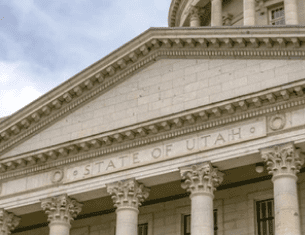
In our digital age, balancing public safety with the 4th Amendment's protections is a nuanced endeavor. As law enforcement professionals, we're at the crossroads of being protectors and defenders of constitutional rights. Navigating this landscape requires a steadfast commitment to our foundational principles. Let's revisit and recommit to our oath in these modern times. The Fourth Amendment reads: more "The right of the people to be secure in their persons, houses, papers, and effects, against unreasonable searches and seizures, shall not be violated, and no Warrants shall issue, but upon probable cause, supported by Oath or affirmation, and particularly describing the place to be searched, and the persons or things to be seized." “The Fourth Amendment is not, of course, a guarantee against all searches and seizures, but only against unreasonable searches and seizures.” (emphasis added) United States v. Sharpe, 470 U.S. 675, 682, 105 S.Ct. 1568, 84 L.Ed.2d 605 (1985). “Whether a particular seizure is unreasonable depends upon the level of the encounter between the police officer and citizen and the justification for it.” State v. Jervis, 2017 UT App 207, ¶ 14, 407 P.3d 1072. Furthermore, under the Fourth Amendment, defendants enjoy the rebuttable presumption that a search or seizure is unreasonable if effected without a warrant. See, e.g., Katz v. United States, 389 U.S. 347, 357, 88 S.Ct. 507, 19 L.Ed.2d 576 (1967); State v. Christensen, 676 P.2d 408, 411 (Utah 1984). “The United States Supreme Court then emphasized that searches conducted outside the judicial process, without prior approval by judge or magistrate, are per se unreasonable under the Fourth Amendment–subject only to a few specifically established and well-delineated exceptions.” Katz, 389 U.S. at 357. State v. Smith, 2022 UT 13, ¶ 11, 513 P.3d 629, 634, reh'g denied (June 29, 2022). The Fourth Amendment is not, of course, a guarantee against all searches and seizures, but only against unreasonable searches and seizures. Home Searches and seizures inside a home without a warrant are presumptively unreasonable. Payton v. New York, 445 U.S. 573 (1980). However, a warrantless search may be lawful: · If an officer is given consent to search; Davis v. United States, 328 U.S. 582 (1946) · If the search is incident to a lawful arrest; United States v. Robinson, 414 U.S. 218 (1973) · If there is probable cause to search and exigent circumstances; Payton v. New York, 445 U.S. 573 (1980) · If the items are in plain view; Maryland v. Macon, 472 U.S. 463 (1985). A Person When an officer observes unusual conduct which leads him reasonably to conclude that criminal activity may be afoot, the officer may briefly stop the suspicious person and make reasonable inquiries aimed at confirming or dispelling the officer's suspicions. See, e.g., Terry v. Ohio, 392 U.S. 1 (1968); Minnesota v. Dickerson, 508 U.S. 366 (1993) Utah courts recognize three different levels of constitutionally permissible encounters between police officers and citizens. A level one encounter is a consensual encounter, which does not implicate the Fourth Amendment. An officer may approach an individual and ask questions, but s long as the person ... remains free to disregard the questions and walk away, there has been no intrusion upon that person's liberty or privacy as would under the Constitution require some particularized and objective justification. On the other hand, a level two encounter is a seizure within the meaning of the Fourth Amendment. It occurs when the officer, by means of physical force or show of authority has in some way restrained the liberty of the person. To be constitutionally permissible, an officer must have a reasonable, articulable suspicion that a person has committed or is about to commit a crime before the person can be detained. A level two detention must be temporary and last no longer than is necessary to effectuate the purpose of the stop. Finally, a level three encounter occurs when a police officer arrests a suspect based on probable cause that an offense has been or is being committed. State v. Bui-Cornethan, 2021 UT App 56, ¶ 17, 490 P.3d 191, 195, cert. denied, 497 P.3d 832 (Utah 2021). Circumstances demonstrating that a level two stop is under way include the presence of more than one officer, the display of an officer's weapon, physical touching of the person, or use of commanding language or tone of voice. Further, the manner of questioning, the content of the questions, and the context in which the questions are being asked can convert mere questioning into a level two seizure if, under all of the circumstances, the questioning demonstrates a show of authority sufficient to restrain freedom of movement. State v. Alverez, 2006 UT 61, ¶ 12, 147 P.3d 425. The community caretaking doctrine recognizes that police activity is not limited to criminal investigations. Rather, an officer's duty to protect and serve extends to helping individuals in the absence of criminal activity. This might include “helping stranded motorists, returning lost children to anxious parents, assisting and protecting citizens in need.” People v. Ray, 21 Cal.4th 464, 88 Cal.Rptr.2d 1, 981 P.2d 928, 931 (1999). Utah courts have recognized this broader duty on several occasions. See, e.g., State v. Anderson, 2015 UT 90, 362 P.3d 1232 (holding that the community caretaking exception justified the warrantless seizure of a motorist parked on the side of a rural highway on a cold night); Salt Lake City v. Davidson, 2000 UT App 12, ¶ 11, 994 P.2d 1283 (recognizing the community caretaking exception), abrogated on separate grounds by State v. Adams, 2017 UT App 205, 407 P.3d 1027; see also Brigham City v. Stuart, 547 U.S. 398, 401-403, 126 S.Ct. 1943, 164 L.Ed.2d 650 (2006) (in which the U.S. Supreme Court analyzed Utah's separate but related “emergency aid doctrine,” which recognizes a police officer's duty to aid someone “seriously injured or threatened with such injury” regardless of criminal activity). State v. Smith, 2022 UT 13, ¶ 14, 513 P.3d 629, 635, reh'g denied (June 29, 2022)